Κυριακή 5 Αυγούστου 2012

Το «νανο-χώμα» των αρχαίων Ελλήνων

Το «νανο-χώμα» των αρχαίων ΕλλήνωνΥπάρχει τίποτε πιο ταπεινό από το χώμα; Και όμως, ακόμη και τα πιο ταπεινά πράγματα, αν κάποιος τα αξιοποιήσει σωστά, μπορούν να γίνουν όχι μόνο πολύτιμα αλλά και προσοδοφόρα. Παρ' ότι ο Πλάτων θεωρούσε τον πηλό κάτι εντελώς κοινό και τετριμμένο - «των φαύλων και προχείρων» -, οι ίδιοι οι σύγχρονοί του τον διέψευσαν. Οι αρχαίοι κεραμείς της Αθήνας πήραν το κοινό χώμα της Αττικής στα χέρια τους και το μετέτρεψαν σε πραγματικό χρυσάφι αφού τα αγγεία τους μονοπώλησαν τις διεθνείς αγορές της εποχής τους. Το μετέτρεψαν επίσης σε ένα σπάνιο υλικό. Το περίφημο μελανό υάλωμα των αττικών αγγείων, αυτό που πολλοί προσπάθησαν αλλά κανένας δεν κατόρθωσε να μιμηθεί, είναι στην ουσία ένα νανοϋλικό με ιδιαίτερες χημικές και μηχανικές ιδιότητες. Τέτοιες ώστε πρόσφατα προσείλκυσε το ενδιαφέρον της NASA η οποία αναζητεί στη σύστασή του μυστικά για να βελτιώσει τη μόνωση των διαστημοπλοίων της.

Κάποτε, γράφει ο Ηρόδοτος, ένα καράβι έφυγε φορτωμένο με εμπορεύματα από την Ελλάδα και, αφού έφθασε ως την Ισπανία, γύρισε πίσω με «τζίρο» χίλιες φορές την αξία του φορτίου του. Ακόμη και αν αυτός ήταν ένας «αστικός μύθος» της αρχαιότητας, το βέβαιο είναι ότι για μεγάλο διάστημα υπήρξε ένα εξαγωγικό προϊόν το οποίο μπορούσε να «πιάσει» υπέρογκες τιμές φέρνοντας μεγάλα κέρδη στους εμπόρους, αλλά και στους δημιουργούς του: τα ερυθρόμορφα αττικά αγγεία. Επί τρεις ολόκληρους αιώνες έκαναν θραύση - αν αυτή η έκφραση μπορεί να επιτραπεί για ένα τέτοιο υλικό - στις ξένες αγορές, μετατρέποντας κυριολεκτικά το χώμα σε χρυσάφι και χαρίζοντας στην Αθήνα ένα ασυναγώνιστο μονοπώλιο στον τότε γνωστό της κόσμο.
Σήμερα η αξία τους είναι ανεκτίμητη και ασκούν την ίδια γοητεία ως τα πέρατα της Γης• στους επισκέπτες που σπεύδουν να τα θαυμάσουν στα μουσεία εντός και εκτός Ελλάδας και στους συλλέκτες που δίνουν πολλά για να τα αποκτήσουν. Πρόσφατα απέσπασαν επίσης το ενδιαφέρον ενός μάλλον απρόσμενου θαυμαστή: της NASA. Μια θυγατρική της αμερικανικής διαστημικής υπηρεσίας ξεκίνησε μαζί με το Μουσείο Γκετί - και με μια παχυλή χρηματοδότηση 800.000 δολαρίων - μελέτες για να διερευνήσει τη σύστασή τους.

Το μελανό υάλωμα «γυάλισε» στη NASA
Η NASA ενδιαφέρεται κυρίως για το περίφημο μελανό υάλωμα των αγγείων, αναζητώντας σε αυτό μυστικά που θα μπορούσαν να τη βοηθήσουν να βελτιώσει την ανθεκτικότητα των κεραμικών που χρησιμοποιεί για τη μόνωση των διαστημοπλοίων της. Εδώ όμως μπορούμε με βεβαιότητα να πούμε ότι η αντίστοιχη έρευνα από έλληνες επιστήμονες βρίσκεται… έτη φωτός μπροστά. Οχι μόνο γιατί έχει ξεκινήσει δεκαετίες νωρίτερα έχοντας στη διάθεσή της απολύτως πιστοποιημένα δείγματα από τις αρμόδιες Εφορείες Αρχαιοτήτων, αλλά, επιπλέον, επειδή από τη θεωρία του εργαστηρίου έχει περάσει στην πράξη. Για να κάνουν καλύτερες συγκρίσεις και να γνωρίσουν τη δουλειά «από μέσα», οι ερευνητές φτιάχνουν μάλιστα οι ίδιοι τεχνολογικά πιστά αντίγραφα αρχαίων κεραμικών τόσο κοντινά στα αρχικά ώστε να χρειάζονται ειδική σήμανση με ιχνοστοιχεία προκειμένου να αποφευχθεί η παράνομη πώλησή τους ως αυθεντικών.
Τι ήταν αυτό που έκανε τα αττικά αγγεία τόσο ιδιαίτερα και τόσο δύσκολα στην απομίμησή τους ακόμη και από τους σύγχρονούς τους επίδοξους αντιγραφείς, που γνώριζαν την κεραμική τέχνη εκείνης της εποχής πολύ καλύτερα από εμάς; Το μυστικό, όπως έχουν ανακαλύψει σήμερα οι ειδικοί, βρίσκεται στην άργιλο. Η αττική γη πρόσφερε στους κεραμείς της τις κατάλληλες πρώτες ύλες ώστε να επιτύχουν όχι μόνο ένα υάλωμα με μοναδικό χρώμα και αντοχή, αλλά και ένα «σώμα» εξαιρετικής ποιότητας. Και φυσικά αυτοί εκμεταλλεύθηκαν επάξια το δώρο βάζοντας όλη την τέχνη και τη δημιουργικότητά τους.

Νανοϋλικό δοκιμασμένο για χιλιετίες

Οι Αθηναίοι προτιμούσαν συχνά τα σκεύη τους - όπως αυτή η μελαμβαφής λεκανίδα με πώμα - να είναι λιτά, χωρίς άλλη διακόσμηση πέρα από το στιλπνό μελανό υάλωμά τους.


Αυτό είναι όμως μόνο ένα από τα πολλά μυστικά που τα αττικά αγγεία κρατούσαν επί χιλιετίες καλά κρυμμένο. Αν και αποτέλεσαν αντικείμενο εξέτασης, κυρίως από ξένους μελετητές, εδώ και αιώνες, η σύστασή τους άρχισε να αποκρυπτογραφείται μόλις από τη δεκαετία του 1990 και μετά, από επιστήμονες του ΕΚΕΦΕ Δημόκριτος, χάρη στην ανάπτυξη των σύγχρονων μικροαναλυτικών τεχνικών. Η πρώτη και η πιο αναπάντεχη ίσως για όσους δεν ασχολούνται με τις θετικές επιστήμες διαπίστωση ήταν ότι, αν και αρχαία, η βαφή τους ανήκει στα υλικά της τελευταίας λέξης της τεχνολογίας, σε αυτά που σήμερα ονομάζουμε νανοϋλικά.
«Αν περιγράψουμε το αττικό υάλωμα με μοντέρνους όρους θα λέγαμε ότι είναι ένα νανοϋλικό» λέει μιλώντας στο «Βήμα» η Ελένη Αλούπη, η οποία ασχολήθηκε με τη μελέτη της σύστασης των αττικών αγγείων κατά τη διάρκεια της διατριβής της στο ΕΚΕΦΕ Δημόκριτος και σήμερα έχει ιδρύσει τη «Θέτις Authentics» εταιρεία ασχολούμενη με τη μελέτη και την πιστοποίηση της αυθεντικότητας αρχαίων αντικειμένων, καθώς και το Εργαστήριο «Θέτις» για την παραγωγή τεχνολογικά αυθεντικών αντιγράφων αρχαίων κεραμικών σαν αυτά που βλέπουμε στους σταθμούς του μετρό και στα πωλητήρια αρκετών μουσείων. «Πρόκειται για ένα αλκαλο-αργιλοπυριτικό γυαλί το οποίο χρωματίζεται από νανοκρυστάλλους μαγνητίτη» εξηγεί. Σε τι διαφέρει από τα κοινά γυαλιά; «Εχει υψηλό ποσοστό οξειδίου του αργιλίου, το οποίο συμμετέχει στη διαμόρφωση του γυαλιού εξίσου με το οξείδιο του πυριτίου, γεγονός το οποίο του προσδίδει πολύ μεγάλη ανθεκτικότητα στη διάβρωση και ιδιαίτερη μηχανική αντοχή».
Οι νανοκρύσταλλοι του μαγνητίτη είναι αυτοί που δίνουν στο αττικό μελανό υάλωμα το μοναδικό «μαύρο-μπλε» χρώμα του. «Το μελανό χρώμα είναι αποτέλεσμα της διασποράς των μαύρων νανοκρυστάλλων μέσα στο διάφανο αλκαλο-αργιλοπυριτικό γυαλί που παίρνει μια μπλε απόχρωση από ίχνη δισθενούς σιδήρου» διευκρινίζει η χημικός. Ο σχηματισμός των νανοκρυστάλλων μαγνητίτη είναι αποτέλεσμα τόσο της σύστασης της πρώτης ύλης - δηλαδή της αργίλου - που χρησιμοποιείται για την παρασκευή της βαφής των αγγείων όσο και μιας σχολαστικής διαδικασίας όπτησης σε συγκεκριμένες θερμοκρασίες.

Αργιλόχρωμα αυστηρών προδιαγραφών
Ας πάρουμε όμως τα πράγματα από την αρχή. Η βαφή των αττικών αγγείων είναι ουσιαστικά ένα αργιλόχρωμα -παρασκευάζεται δηλαδή από άργιλο. Οχι όμως από οποιαδήποτε άργιλο, όπως έχουν ανακαλύψει οι επιστήμονες. Οι κεραμείς της αρχαίας Αθήνας επέλεγαν με μεγάλη προσοχή την πρώτη ύλη τους ανάλογα με το αποτέλεσμα που ήθελαν να επιτύχουν - πράγμα που σημαίνει ότι γνώριζαν πολύ καλά τις ιδιότητές της - και αυτό φαίνεται ακόμη και από το γεγονός ότι χρησιμοποιούσαν διαφορετική άργιλο για τη βαφή και διαφορετική για το σώμα των αγγείων τους.
Για να δώσει η βαφή το επιθυμητό άψογο μελανό υάλωμα, η πρώτη ύλη της έπρεπε να είναι μια άργιλος πλούσια σε αργιλικά ορυκτά, σίδηρο και κάλιο και φτωχή σε οξείδια του ασβεστίου (έτσι μόνο μπορούσε να παραγάγει τις αντιδράσεις που οδηγούν στον σχηματισμό του μαγνητίτη). Παράλληλα έπρεπε όταν αναμειγνυόταν με νερό να σχηματίζει ένα κολλοειδές αιώρημα (ένα αιώρημα με κόκκους μικρότερους των 0,3 μικρών που θεωρητικά μένει εν αιωρήσει επ' άπειρον). Το αιώρημα αυτό όταν συμπυκνωνόταν έδινε μια υπέρλεπτη «αργιλική βαφή» (έναν «μπαντανά», όπως το λένε παραδοσιακά κεραμείς και αγγειοπλάστες) με την οποία διακοσμούνταν τα αγγεία που είχαν πλαστεί στον τροχό και στη συνέχεια ψήνονταν με μια πολύ συγκεκριμένη διαδικασία και σε πολύ συγκεκριμένες θερμοκρασίες.

Τριπλό ψήσιμο σε διαφορετικές θερμοκρασίες
Η διαδικασία της όπτησης περιλάμβανε τρία στάδια: οξείδωσης, αναγωγής και πάλι οξείδωσης, όπως θα σας πουν οι ειδικοί. Στο πρώτο στάδιο της οξείδωσης ανέβαζαν τη θερμοκρασία του φούρνου με την παροχή οξυγόνου: ο θάλαμος όπου ψήνονταν τα αγγεία επικοινωνούσε με το κάτω μέρος, όπου καίγονταν τα ξύλα, ενώ ένα άνοιγμα από επάνω άφηνε να φύγουν τα αέρια που παράγονταν από την καύση. Οταν έφθαναν στην επιθυμητή θερμοκρασία και η βαφή άρχιζε να υαλοποιείται, σφράγιζαν τον κλίβανο διακόπτοντας την παροχή οξυγόνου και μειώνοντας με τον τρόπο αυτόν τη θερμοκρασία.
Σε αυτό το στάδιο, της αναγωγής, σχηματίζονται οι νανοκρύσταλλοι του μαγνητίτη και παράγεται το μαύρο χρώμα. Η τελική φάση της οξείδωσης, όπου ανέβαινε και πάλι η θερμοκρασία, ήταν απαραίτητη για να επιτευχθεί η χρωματική αντίθεση του μελανού πάνω στο ερυθρό υπόβαθρο. «Στο στάδιο της οξείδωσης έχουμε το οξείδιο του τρισθενούς σιδήρου, τον αιματίτη, που είναι κόκκινο. Στο στάδιο της αναγωγής δημιουργείται ένας σπινέλιος, ο μαγνητίτης, που έχει θέσεις δισθενούς και τρισθενούς σιδήρου και είναι μαύρος, ενώ παράλληλα το στρώμα της βαφής υαλοποιείται» εξηγεί η κυρία Αλούπη. «Στο τελευταίο στάδιο της επανοξείδωσης χρειάζεται προσοχή ώστε να μην ανέβει πολύ η θερμοκρασία γιατί το υάλωμα θα ξανακοκκινίσει».

Μάτι-θερμόμετρο!
Το εύρος θερμοκρασιών για το οποίο μιλάμε είναι πολύ μικρό. «Η καλύτερη ποιότητα αυτού του υλικού επιτυγχάνεται σε θερμοκρασίες από 880 ως 950 βαθμούς» τονίζει η ερευνήτρια. Πώς μπορούσαν στην αρχαιότητα, χωρίς θερμόμετρα και θερμοστάτες, να υπολογίσουν τη θερμοκρασία του φούρνου με τόση ακρίβεια; Με το μάτι, μας απαντά η ειδικός, και αυτός ήταν ένας λόγος για τον οποίο η δουλειά του «ψήστη» σε ένα εργαστήριο κεραμικής ήταν πολύ σημαντική: «Αν μιλήσετε με παραδοσιακούς κεραμίστες, που έψηναν σε φούρνο με ξύλα, ξέρουν πολύ καλά τις κατάλληλες θερμοκρασίες από τη λεγόμενη ακτινοβολία μέλανος σώματος - την ακτινοβολία που εκπέμπει ένα σώμα όταν πυρακτώνεται. Ο έμπειρος κεραμέας από το χρώμα του φούρνου καταλαβαίνει ποια είναι η κατάλληλη θερμοκρασία. Στους 720 με 730 βαθμούς ο φούρνος γίνεται πορτοκαλί, στους 800 αρχίζει και κοκκινίζει και μετά αρχίζει να ασπρίζει. Στους 950 βαθμούς ο φούρνος λάμπει εσωτερικά. Στους 1.000 είναι κατάλευκος».
Ολα αυτά υποδηλώνουν ότι οι αρχαίοι κεραμείς της Αττικής δεν διέθεταν μόνο ταλέντο αλλά και ένα πολύ υψηλό επίπεδο τεχνολογίας. «Και ένα τέτοιο υψηλό επίπεδο δείχνει συνειδητότητα και στην επιλογή των υλικών τους και αυτό δεν φαίνεται μόνο στη βαφή αλλά και στα υλικά που χρησιμοποιούσαν για το σώμα. Είναι τυποποιημένα και για τον λόγο αυτό θα πρέπει ίσως να σκεφτόμαστε μια κεντρική διάθεση» υπογραμμίζει η κυρία Αλούπη.

Ενα χώμα για πηλό και για... τσιμέντο

Αυτή η λίμνη του Πανάκτου, σε μια έκταση μεταξύ Αττικής και Βοιωτίας που σήμερα εκμεταλλεύεται ο όμιλος Τιτάν, αποτέλεσε πηγή αργίλου για το μαύρο υάλωμα των αττικών αγγείων.


Ειδικά η άργιλος της βαφής έπρεπε να είναι μια ιλλιτική άργιλος, πλούσια σε οξείδια του σιδήρου, με χαμηλό ασβέστιο και χωρίς οργανικά υλικά ή μαρμαρυγία. Λαμβάνοντας υπόψη τα χαρακτηριστικά αυτά η ερευνήτρια προσπάθησε να εντοπίσει στην Αττική κοιτάσματα με κοκκινοχώματα από τα οποία θα μπορούσε να προέρχεται: ένας «υποψήφιος» εντοπίστηκε σε μια λίμνη στο οροπέδιο του Πανάκτου, μεταξύ Αττικής και Βοιωτίας, σε μια έκταση που σήμερα εκμεταλλεύεται η τσιμεντοβιομηχανία Τιτάν. Για να πιστοποιηθεί ωστόσο η προέλευση της αργίλου από ένα συγκεκριμένο μέρος πρέπει να γίνει σύγκριση ιχνοστοιχείων σε αρχαία και σύγχρονα δείγματα - κάτι το οποίο με τις υπάρχουσες τεχνικές δεν φαινόταν μέχρι πρότινος εφικτό.
Σε μια πρόσφατη συνεργασία με τους ερευνητές του εργαστηρίου του επιταχυντή ATOMKI-HAS της Ουγγαρίας οι κυρίες Αλούπη και Αρτεμη Χαβιαρά, η οποία κάνει τη διδακτορική διατριβή της στη «Θέτις» στο πλαίσιο του ευρωπαϊκού προγράμματος Marie-Curie NARNIA, κατόρθωσαν να προχωρήσουν σε μια πρώτη ανάλυση δειγμάτων όχι μόνο από το Πάνακτο, αλλά και από την Ανατολική Αττική, το Μαρκόπουλο, το Κορωπί και άλλες γύρω περιοχές. «Μόλις πρόσφατα βγήκαν τα πρώτα αποτελέσματα» λέει η ειδικός. «Εχουμε αναλύσει 45 δείγματα, αρχαία και νέα, και βλέπουμε πώς αυτά ομαδοποιούνται. Δείχνουν ότι υπάρχουν παραπάνω από μία τοποθεσίες που μας δίνουν καλής ποιότητας υάλωμα, το οποίο είναι συγκρίσιμο με τα αρχαία ως προς τα ιχνοστοιχεία, και τώρα είμαστε στο στάδιο που πρέπει να αυξήσουμε τη στατιστική μας».
Συνθέτοντας αυτές τις πληροφορίες, σε συνδυασμό και με άλλες έρευνες (μια εγκατάσταση πιθανώς παραγωγής αργιλόμαζας που έχει ανασκαφεί στον Αγιο Κοσμά από τη Β' ΕΠΚΑ πιστεύεται π.χ. ότι μάλλον τροφοδοτούσε τους κεραμείς από τη Μυκηναϊκή εποχή για να φτιάξουν μεγάλα αγγεία σε σχήμα «μπανιέρας» που διετίθεντο στον Αργοσαρωνικό), ίσως σε λίγο να έχουμε στα χέρια μας έναν πολύτιμο για τους αρχαιολόγους και για όσους ασχολούνται με την πιστοποίηση της αυθεντικότητας «χάρτη του πηλού» της αρχαίας Αττικής. Ενός πηλού ο οποίος δεν έπαιξε καθοριστικό ρόλο μόνο στη βαφή, αλλά και στο σώμα και στον συνδυασμό τους. Γιατί όπως μας λέει η κυρία Αλούπη, οι απόπειρες αγγείων με σώμα από πηλό από άλλες περιοχές (π.χ. την Κόρινθο) τις περισσότερες φορές δεν δίνουν το κατάλληλο «υπόστρωμα»: η βαφή δεν εφαρμόζει καλά σε αυτά και ξεφλουδίζει.

Από το Ιράκ ως τη Γερμανία
Ανάλογα προβλήματα φαίνεται ότι αντιμετώπιζαν και οι σύγχρονοί τους τεχνίτες - ή καλλιτέχνες; - όταν προσπαθούσαν να μιμηθούν τα αγγεία των αθηναίων κεραμέων. Το εγχείρημα - το οποίο ουδέποτε πέτυχε - δεν αποτελούσε μόνο ζήτημα γοήτρου αλλά και μεγάλου εμπορικού κέρδους. Με τον ερυθρόμορφο ρυθμό οι Αθηναίοι εισήγαγαν όπως μας λέει ο Δημήτρης Παλαιοθόδωρος, επίκουρος καθηγητής Κλασικής Αρχαιολογίας στο Πανεπιστήμιο Θεσσαλίας, μια καινοτομία η οποία τους χάρισε την απόλυτη κυριαρχία στις αγορές του εξωτερικού και ιδιαίτερα στις πλούσιες αγορές της Ιταλίας. «Ο ερυθρόμορφος ρυθμός φαίνεται να είχε μεγάλη επιτυχία σε όλες τις αγορές όπου δραστηριοποιήθηκε το εμπόριό του εκτός από αυτές της Ελλάδας, όπου οι πελάτες φαίνεται ότι ήταν πιο συντηρητικοί και για μεγάλο χρονικό διάστημα συνέχισαν να προτιμούν τον μελανόμορφο» αναφέρει.
Οι πληροφορίες που υπάρχουν σχετικά με το εμπόριο αυτό καθαυτό είναι περιορισμένες, όμως οι αρχαιολόγοι εικάζουν ότι στο εξωτερικό οι έμποροι θα πρέπει πολλές φορές να πουλούσαν τα περιζήτητα αγγεία πολύ πιο ακριβά από ό,τι τα αγόραζαν - πρακτική που άλλωστε συνεχίζεται ως τις μέρες μας. Μέχρι πού έφθανε η «γοητεία» τους; «Εχουν βρεθεί από το Ιράκ ως τη Γερμανία» λέει ο κ. Παλαιοθόδωρος. «Εχουν βρεθεί στη Βαγδάτη, στη Σαξονία, στη Γεωργία, στον Εύξεινο Πόντο, ως το Σουδάν. Οπου υπήρχαν διαδρομές, δηλαδή σε όλη τη Μεσόγειο και σε μεγάλο μέρος της ενδοχώρας της Μεσογείου. Και είναι χαρακτηριστικό ότι όταν η Αθήνα ήταν σε πόλεμο, ας πούμε με την Περσική Αυτοκρατορία, οι εχθροί της συνέχιζαν να αγοράζουν τα αγγεία της».
Σήμερα φυσικά δεν μπορεί να μιλάει κανείς για αγοραστές, όμως οι θαυμαστές των ελληνικών αγγείων έχουν εξαπλωθεί σε όλη την υφήλιο, κάτι το οποίο η κυρία Αλούπη θεωρεί απολύτως δικαιολογημένο. «Δεν υπάρχει αμφιβολία ότι τα αττικά αγγεία κατέχουν μια ιδιαίτερη θέση στην ιστορία της "κεραμικής τέχνης"» λέει. «Αν μπορούσαμε να βγούμε τελείως έξω από την Ιστορία, την αρχαιολογία, από το γεγονός ότι είμαστε Ελληνες, ότι έχει πήξει το μάτι μας να τα βλέπουμε σε όλα τα μουσεία, στα βιβλία, στην τουριστική αγορά, αν βγαίναμε τελείως έξω και ήμασταν ας πούμε Γιαπωνέζοι και τα βλέπαμε για πρώτη φορά, δεν θα λέγαμε "Μα τι καταπληκτικά κόμικ είναι αυτά!";».


Αρχαίο πυρέξ υψηλής τεχνολογίας
Η εξαιρετική ποιότητα των αττικών αγγείων, όπως και τα άλλα σπουδαία δείγματα κεραμικής που προηγήθηκαν, οφείλεται για τον Βασίλη Κυλίκογλου, ερευνητή Α' στο Ινστιτούτο Επιστήμης Υλικών του ΕΚΕΦΕ Δημόκριτος, σε μια μακρά παράδοση που μεταδιδόταν επί χιλιετίες και βελτιωνόταν από γενιά σε γενιά. Στο εργαστήριό του ο ερευνητής μελετά τα αρχαία κεραμικά από την άποψη των θερμικών και μηχανικών ιδιοτήτων τους. Στόχος, μεταξύ άλλων, η ανάπτυξη νέων δομικών υλικών. «Εξετάζουμε τις διάφορες συνταγές που χρησιμοποιούσαν οι αρχαίοι για να κατασκευάσουν κεραμικά ανάλογα με τη χρήση στην οποία θα τα υπέβαλλαν» λέει. «Οι κυριότερες χρήσεις έντονης καταπόνησης ενός κεραμικού είναι είτε όταν χρησιμοποιείται ως μεταφορικό αγγείο, όπως είναι οι αμφορείς, είτε σε διαδικασίες που έχουν να κάνουν με τη φωτιά - δηλαδή μεταλλουργία, όπτηση και προετοιμασία φαγητού».
Οι αρχαίοι κεραμείς χρησιμοποιούσαν διαφορετικές αργίλους ανάλογα με τη χρήση για την οποία προοριζόταν το αγγείο και τις εμπλούτιζαν καταλλήλως. «Εβαζαν μέσα στον πηλό εγκλείσματα σε ποσότητα και μέγεθος που καθιστούσαν τα κεραμικά κατάλληλα για τη χρήση που ήθελαν». Για να επιτύχουν αμφορείς που ήταν ανθεκτικοί στις προσκρούσεις και δεν έσπαζαν εύκολα κατά τη μεταφορά των προϊόντων, π.χ. με τα πλοία, χρησιμοποιούσαν άμμο. «Ετσι» λέει ο κ. Κυλίκογλου «υξάνεται η ανθεκτικότητα, ακόμη και αν χτυπηθούν μπορεί να δημιουργηθεί μια μικρή ρωγμή, αλλά αυτή η ρωγμή δεν θα διαδοθεί, όπως στο γυαλί». Η αντοχή στη φωτιά, σε κεραμικά που θα χρησιμοποιούνταν για τη μαγειρική ή για τη χύτευση μετάλλων, απαιτούσε πιο «μελετημένη» τεχνική.
Κατ' αρχήν, ανάλογα με το αν ήθελαν το κεραμικό να «ανεβάζει» τη θερμοκρασία γρήγορα ή να την «κρατάει» (και να σιγοψήνει, ας πούμε, αν ήταν μια χύτρα), χρησιμοποιούσαν άργιλο που περιείχε ασβέστιο. Για να δώσουν μεγαλύτερη πυραντοχή πρόσθεταν στον πηλό εγκλείσματα από χαλαζία, αστρίους ή φυλλίτες. «Τα τελευταία εγκλείσματα ήταν πεπλατυσμένα» διευκρινίζει ο ειδικός. «Αυτά τα πεπλατυσμένα σαν φύλλα εγκλείσματα αν τα πλάσει ο κεραμέας προσανατολίζονται παράλληλα με τα τοιχώματα και έτσι δρουν ως θερμομόνωση. Επαιρνε λίγο παραπάνω η χύτρα να ζεσταθεί, όμως διατηρούσε τη θερμοκρασία της για πάρα πολύ χρόνο».
Στο ΕΚΕΦΕ Δημόκριτος οι διαπιστώσεις αυτές δεν περιορίζονται απλώς σε μια καλή γνώση του παρελθόντος, αλλά «περνούν» και στο μέλλον, αφού χρησιμοποιούνται ως βάση για την ανάπτυξη νέων υλικών «Μια εφαρμογή, έχουμε και ένα πρόγραμμα γι' αυτό, είναι ότι προσπαθούμε να δημιουργήσουμε κονιάματα» εξηγεί ο κ. Κυλίκογλου. «Εγκλείουμε μέσα θραύσματα κεραμικών τα οποία όμως δεν είναι τυχαία, δεν παίρνουμε δηλαδή οποιοδήποτε κεραμικό - αν πάρει κάποιος π.χ. τούβλα και τα σπάσει δεν θα έχει το ίδιο αποτέλεσμα. Γνωρίζοντας από την αρχαία τεχνολογία σε ποια θερμοκρασία το κεραμικό έχει τις καλύτερες ιδιότητες, προσδίδουμε στα κονιάματα αυτά καλύτερες αντοχές κατά το πήξιμο, γιατί δημιουργούνται υδραυλικές φάσεις ανάμεσα στο κεραμικό και στον ασβέστη, αλλά και καλύτερες θερμομονωτικές ιδιότητες».


Τα «καλά» σερβίτσια

Αναθηματικός πίνακας από τα Πεντεσκούφια της Κορίνθου: η δουλειά του «ψήστη» ήταν πολύ σημαντική για την τελική ποιότητα του αγγείου.


Αν σήμερα τα «ντιζάιν» σκεύη σας φέρουν την υπογραφή του οίκου Alessi και τα σερβίτσια σας αυτή του Versace ή του Armani, κάποτε τα πράγματα λειτουργούσαν αντίστροφα: οι αρχαίοι κάτοικοι της Ιταλίας, και περισσότερο από όλους οι Ετρούσκοι, δεν διανοούντο «καλό» συμπόσιο χωρίς τα απαραίτητα ερυθρόμορφα αττικά αγγεία. «Ηταν τα δικά μας αντίστοιχα σκεύη πολυτελείας» λέει μιλώντας στο «Βήμα» ο Μιχάλης Τιβέριος, ακαδημαϊκός και καθηγητής Κλασικής Αρχαιολογίας στο Αριστοτέλειο Πανεπιστήμιο Θεσσαλονίκης. «Είχαν τα καθημερινά σερβίτσια και είχαν και τα σερβίτσια για τις επίσημες εκδηλώσεις του σπιτιού - π.χ. για ένα συμπόσιο. Δεν είναι τυχαίο ότι τα περισσότερα σχήματα που εξάγονταν σχετίζονται με το συμπόσιο ως προς τη χρήση τους».
Πέρα από τα συμπόσια, τα αττικά αγγεία πολυτελείας αποτελούσαν επίσης πρώτης τάξεως αναθήματα σε ιερά αλλά και φόρο τιμής για τους νεκρούς. «Τα έβαζαν στους τάφους των αγαπημένων τους προσώπων αφού πίστευαν ότι η ζωή συνεχίζεται και επομένως θα τους ήταν χρήσιμα στον άλλο κόσμο» εξηγεί ο ακαδημαϊκός. Οπως διευκρινίζει, τα περισσότερα αγγεία που έχουν βρεθεί σε τάφους είναι μεταχειρισμένα. «Φέρουν σαφή ίχνη χρήσης που σημαίνει ότι τα χρησιμοποιούσε εν ζωή ο νεκρός - ή οι οικείοι του - και όταν πέθανε τα έβαλαν στον τάφο. Υπάρχουν όμως και περιπτώσεις που αγγεία ολοκαίνουργια - "τσίλικα" ας μου επιτραπεί η έκφραση - πήγανε κατ' ευθείαν στον τάφο, ως κτέρισμα. Πιθανόν να πρόκειται για περιπτώσεις κατά τις οποίες οι συγγενείς του νεκρού συνέβαινε να μην διέθεταν κατά τη στιγμή του θανάτου του αγγεία πολυτελείας. Ετσι του αγόραζαν καινούργια».
Τα αττικά ερυθρόμορφα αγγεία κυριάρχησαν στις διεθνείς αγορές από τις τελευταίες δεκαετίες του 6ου ως τα τέλη του 4ου αιώνα π.Χ.. Ωστόσο οι Αθηναίοι κεραμείς σε πολύ λίγες περιπτώσεις κέρδισαν χρήμα και κοινωνική αναγνώριση. «Το επάγγελμα του κεραμέα δεν ήταν ποτέ προσοδοφόρο» μας λέει ο κ. Τιβέριος. «Αν έχετε διαβάσει συνεντεύξεις παλιών σιφνίων τσουκαλάδων, πολλοί λένε ότι καμία κοπέλα του νησιού δεν ήθελε να τους παντρευτεί. Ε, κάτι τέτοιο συνέβαινε συνήθως και στην αρχαιότητα».
Οι κεραμείς της Αττικής που δεν ήταν δούλοι ή μέτοικοι αλλά Αθηναίοι πολίτες μάλλον ανήκαν, τις περισσότερες φορές, στις χαμηλότερες κοινωνικές τάξεις των θητών και των ζευγιτών. «Η κακή εικόνα του επαγγέλματος του κεραμέα φαίνεται ότι δεν ίσχυε για την Αθήνα στα τέλη του 6ου και στις αρχές του 5ου αιώνα π.Χ.. Είναι η εποχή που αθηναίοι κεραμείς προσφέρουν πανάκριβα αναθήματα επάνω στην Ακρόπολη» προσθέτει ο καθηγητής. «Τα χρόνια αυτά πρέπει να μοσχοπουλούσαν τα προϊόντα τους στους Ετρούσκους. Είναι η μόνη περίοδος όπου φαίνεται ότι απέκτησαν όχι μόνο χρήμα αλλά και κοινωνική αναγνώριση αφού εκτός των άλλων συναναστρέφονταν και γνωστά πρόσωπα της αθηναϊκής κοινωνίας όπως ο γνωστός στρατηγός Λέαγρος».


Από τον Wedgwood στο Calgon
Ο μεγάλος άγγλος κεραμέας Τζοσάια Γουέτζγουντ - ιδρυτής του γνωστού οίκου πορσελάνης - ήταν από τους πρώτους που μελέτησαν και προσπάθησαν να αναπαραγάγουν τα αττικά αγγεία. Παρά τις ενδελεχείς προσπάθειές του ο Γουέτζγουντ τελικά δεν το πέτυχε. Αντ' αυτού παρήγαγε τους λεγόμενους «black basalts», σήμερα αγγεία συλλεκτικά και πανάκριβα που αποτελούν σήμα κατατεθέν του οίκου Wedgwood.
Ο αμερικανός χημικός Τζόζεφ Νομπλ από την πλευρά του πρότεινε στη δεκαετία του 1960 μια συνταγή παραγωγής μαύρου υαλώματος με… Calgon, η οποία κυριάρχησε επί τρεις και πλέον δεκαετίες, ιδιαίτερα στον αγγλόφωνο κόσμο. Κατά καιρούς διάφοροι - κυρίως αρχαιολόγοι και κεραμείς - έχουν υποστηρίξει ότι για να φτιάξουν τη βαφή τους οι αθηναίοι κεραμείς πρόσθεταν διάφορα «εξωτικά» υλικά - από στάχτη φυτών και τριμμένα κόκαλα ως ούρα ή αίμα ζώων. Η κυρία Αλούπη απορρίπτει όλες αυτές τις συνταγές, αφού τις δοκίμασε σχολαστικά κατά τη διάρκεια της διατριβής της στο ΕΚΕΦΕ Δημόκριτος περίπου πριν από 20 χρόνια. Οι περισσότερες - όπως του Νομπλ - δεν δίνουν αποτέλεσμα όμοιας σύστασης με το πρωτότυπο ενώ όσες επιτυγχάνουν κάτι σχετικά κοντινό απαιτούν καλά ελεγμένες εργαστηριακές συνθήκες. «Μου είναι δύσκολο να φανταστώ ότι δίπλα σε κάθε αρχαίο εργαστήριο κεραμικής υπήρχε και ένα μικρό χημείο» λέει. Η μόνη τεχνική που ως τώρα φαίνεται να επιτυγχάνει πανομοιότυπο αποτέλεσμα ως προς τη σύσταση και την ποιότητα είναι η χρήση βαφής απλώς και μόνο με νερό και άργιλο σωστά επιλεγμένη από συγκεκριμένα σημεία της Αττικής. «Και αυτός είναι ο μόνος τρόπος για να εξηγήσουμε γιατί το υλικό έχει πάντα σταθερή χημική σύσταση» τονίζει η ερευνήτρια. «Η σταθερή σύσταση του τελικού προϊόντoς ισοδυναμεί με σταθερή χρήση πρώτων υλών και σχολαστική και ακριβή διαδικασία επεξεργασίας τους. Και ποιος μπορεί να το κάνει αυτό καλύτερα από την ίδια τη φύση;»

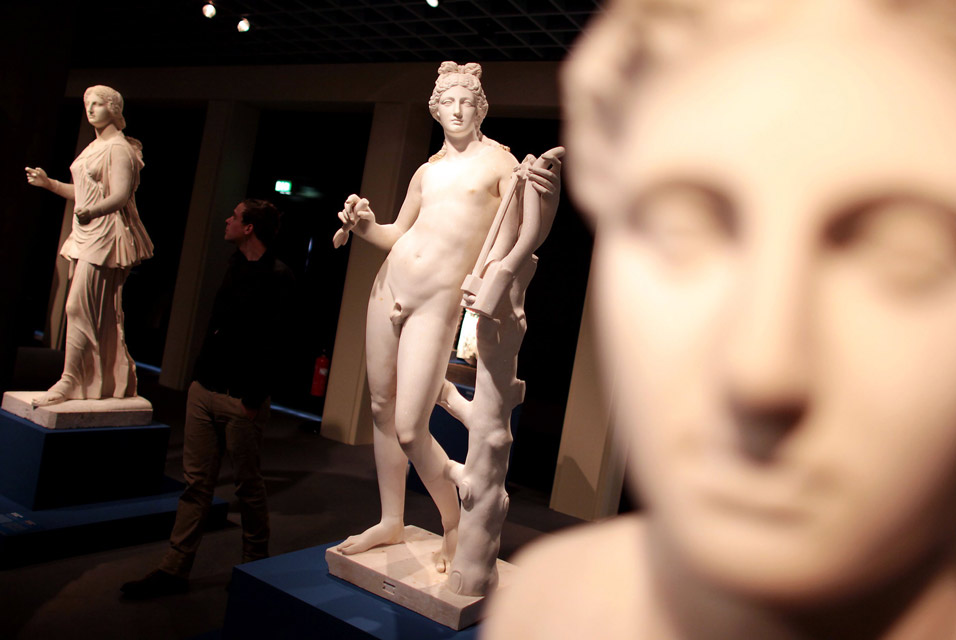
Olympian world of the Greek gods recreated

COLOGNE.- Even today, the world of the ancient Greek gods has lost none of its fascination. Accounts of the deeds of mighty Zeus, his jealous wife Hera, the twins Apollo and Artemis, beautiful Aph-rodite, and Dionysos the god of wine, are as enthralling as ever after more than 2000 years.
Greek poets and artists conveyed a vivid picture of the world of these gods. Their work set creative precedents and were a source of inspiration; they also furnished models and a stim-ulus for new interpretations and original compositions by Roman writers and sculptors.
Over a period of more than three hundred years, the Brandenburg-Prussian Electors and Kings in Berlin collected antique works of art, which are now in the museums of the ‘Preußischer Kulturbesitz’ Foundation – the Pergamon Museum and the Collection of Antiquities. For the first time in Cologne, in the exhibition The Return of the Gods, the Olympian world of the Greek gods is recreated with marble statues, stone reliefs, bronzes and luxurious vases from the Berlin collections – a cross section of outstanding European art from early Greek times to the imperial Roman period.

Zeus, Hades, Poseidon – the Father Gods
Zeus, the Romans’ Jupiter, was the majestic ruler of the Olympian world. As the lord of the heavens, he carried a thunderbolt as his weapon. Zeus was the father of nu-merous gods and heroes; most of his offspring were not begotten with his wife Hera, but were the result of his many erotic liaisons.
Poseidon was the master of the sea, inland waters and storms. As the “shaker of the Earth”, who made the Earth tremble with his trident, he was held responsible for earthquakes and natural disasters. People also venerated him as the protector of their ships. The Romans called this god Neptune.
Brother of Zeus and Poseidon was Hades, the Romans’ Pluto. He became the lord of the underworld when the gods drew lots to divide the world between them.
All these “Father Gods” are represented as mature, dignified and mighty. Zeus the father of the gods, Hades the ruler of the underworld and Poseidon the god of the sea, are difficult to tell apart when not depicted with their characteristic attributes

Asclepius, the Healing God
Asclepius was the god of medicine and healing. He was the son of Apollo and a mortal woman, so merely a demigod. He was nevertheless worshipped as a god but not regarded as one of the Olympian gods.
Asclepius’ place was among the people. He is represented in the likeness of a Greek citizen: bearded, wearing a robe and leaning on a staff. A snake is coiled around his staff and the staff (or rod) of Asclepius is still the traditional symbol of medicine.
Asclepius had many sanctuaries that attracted throngs of worshippers, where the sick sought cures through healing sleep (incubation). A centre of his cult developed at Epidaurus and another was located on the island of Kos. The physicians of Kos achieved great fame in the 5th century BC. The best known was Hippocrates and, even today, doctors swear the “Hippocratic Oath”.
The cult of Asclepius reached the western part of the Roman Empire in 293 BC when the Epidaurus sanctuary established a shrine to the Latinised Aesculapius on Rome’s Tiber Island.

Hera and Demeter – the Mothers
Hera, the Romans’ Juno, was the sister and spouse of Zeus. As the queen of the gods she watched over marriage and legitimate offspring. She therefore pursued the amorous escapades of her husband with jealous severity.
Demeter, Ceres for the Romans, was the goddess of the fertile earth, of grain and agriculture. According to the “Homeric” hymn to Demeter, her daughter Kore was abducted by Hades and, as Persephone/Proserpina, became his wife in the under-world. Searching for her daughter, the desperate Demeter neglected her responsibilities as the goddess of agriculture, which led to a severe drought. Only after the return of her daughter for two-thirds of the year did she allow everything to grow and flourish again, but Kore-Persephone had to spend one third of each year with Hades in the underworld, during which time nature was also dead.Demeter and Hera are usually depicted as motherly goddesses, often wearing a dia-dem and veil. When ears of wheat – a specific attribute of Demeter – are not shown, it is scarcely possible to distinguish between the two.

Aphrodite and Hermes
Aphrodite’s sphere of influence was love; her son Eros was the personified god of love. From the 5th century BC onwards, Aphrodite was depicted in ever more reveal-ing clothes: light and flimsy garments accentuated the beauty of the female body. Aphrodite first appeared completely naked in the 4th century BC, as a statue by Praxiteles, whose visualisation of the goddess was widely copied. Venus, the Roman equivalent of Aphrodite, was said to be the mother of Aeneas. Hence she became the mythical ancestress of the family of the Julii, to which both Caesar and Augustus belonged.Hermes was the messenger of the gods, the god of roads, boundaries and herds-men, the patron of thieves. He guided the souls of the dead into the after-world.Hermes wore the clothes of a traveller: a short cape, a broad-brimmed hat and boots or sandals. Speed was suggested by wings attached to his hat, shoes or heels. In addition, he carried a messenger’s staff with two snakes (Kerykeion). The Roman equivalent of Hermes was Mercury, the god of commerce and economic prosperity.

Athena – the Patroness of Great Works
Athena was the wise daughter of Zeus. Before his marriage to Hera, Zeus was the husband of Metis, the goddess of wisdom. Zeus then swallowed his consort when she was pregnant with Athena because it had been prophesied that she would bear him a child stronger than himself, who would ultimately depose him. Athena was born when Hephaestus, the blacksmith god, cleaved open her father’s skull.Athena was the goddess of battle, depicted with a helmet, lance and shield. Another emblem was the “aegis”, a breastplate with the head of the Gorgon Medusa in the centre. Athena was the patroness of the crafts and all artistic activities. She is also said to have invented the flute. While playing it beside a stream, she saw a reflection of herself with her cheeks puffed out, and crossly cast the instrument aside. The satyr Marsyas retrieved the flute and later challenged Apollo to a musical contest.Many cities invoked the protection of Athena, especially Athens, where she was worshipped on the Acropolis. Her Roman equivalent was Minerva.

Apollo and Artemis – divine twins
The twins Apollo and Artemis were the children of Zeus and Leto. Jealous Hera pur-sued her rival relentlessly until, finally, the island of Delos allowed Leto to give birth to her children there.Apollo was the upholder of order in human society, slaying wrongdoers with his bow and sending pestilence as a punishment. He defended religious purity. His attribute was the laurel. He was also the god of oracles and divine prophesies, leader of the muses and a master of the lyre. He was depicted as an idealized youth with long hair.Artemis, the goddess of the hunt and huntsmen, represented unspoiled nature. Known since ancient times as the “Mistress of the Animals” and the “unconquered virgin”, she nurtured and protected young animals, but was also a huntress who killed her prey. Since the late classical period, she has usually been depicted as a young girl in a hunting tunic with a bow and a quiver full of arrows, often accompanied by an animal. Just as her brother was both the god of healing and the god of pestilence, so Artemis was the goddess of childbirth and the bringer of death in childbirth.

The Sanctuary
In the Greek and Roman world, the sanctuary was the most important place for wor-shipping the gods. People would go there with votive offerings and gifts to praise or appease a deity and to ask for favours.
At larger ritual sites there were temples with a cult image of the god. However, the centre of the sanctuary was always the altar where sacrifices were offered. At public ceremonies, cattle were often sacrificed: the priests would burn the bones, fat and hide of the animal as an offering to the gods; the meat would then be consumed by the worshippers at a ritual feast. Individual citizens usually donated smaller animals, fruit or libations. The rites could be accompanied by processions, dancing and music.
An abundance of offerings of various types would accumulate at such sacred sites. Large objects like statues would be set up on display while smaller votive objects, such as miniature figurines or weapons captured from the enemy, were deposited somewhere. In large Greek sanctuaries, Olympia and Delphi for example, there were also treasuries where valuable offerings were stored.

Dionysus and the Theatre
Dionysus was the god of wine and delirious ecstasy. Those who gave themselves to this god had to risk becoming “possessed”. Dionysus was surrounded by a retinue (thiasos) of half-wild hybrid creatures, youthful satyrs, older sileni, and frenzied maenads who often danced to the music of flutes and drums.
Dionysus was depicted as child, as a seductive youth with a body that is sometimes rather feminine, and as an old man leaning on a satyr. His attributes were the ivy, either as a wreath to prevent intoxication or wound around a staff (thyrsos), and a drinking vessel (kantharos). He always symbolised a hedonistic way of life.
Greek theatre originated in the cult of Dionysus. In many places of worship, dramatic performances were part of his festivals. Starting in Athens in the 6th century BC, first tragedies, then “satyr” plays and – after 486 BC – comedies were performed during the Great Dionysia festival. All the roles in the plays, even female roles, were taken by three male actors wearing costumes and masks, accompanied by a choir.

The Pergamon Altar
In the conflicts to succeed Alexander the Great, Philhetairos was able to establish his rule in Asia Minor, at Pergamon. His grandson, Attalos I, took the title of King. The latter’s son, Eumenes II (197-159 BC), defeated the invading Celts and developed the fortress into a Hellenistic city with prestigious marble buildings.The religious centre was the altar of Zeus, which was visible from afar. A flight of steps led up to a podium and the colonnaded area with the altar for burnt offerings. The podium was decorated on all sides by a frieze depicting the battle of the gods against the giants. The rear walls illustrated the history of the founding of Pergamon. Acroteria with figures stood on the roof.
The gigantomachy on the Pergamon Altar marks the pinnacle of Hellenistic art. It is the most complete antique depiction of the struggle of the younger generation of Olympian gods, together with Hercules, against the giants, born out of chaos, who were trying to destroy the new world order. Zeus with his lightning bolts is shown fighting a snake-footed giant, an allusion to the victory over the Celts

Ο Mυστηριώδης Θρακικός Πολιτισμός

Τα τελευταία χρόνια όλοι έχουμε διαβάσει ή έχουμε ακούσει με τον ένα ή τον άλλο τρόπο σχετικά
με την ιστορία του αρχαίου Ελληνικού κόσμου. Την ιστορία του πολιτισμού που αποτέλεσε σημείο
αναφοράς για την δημιουργία του σύγχρονου κόσμου. Αλλά δεν νομίζω πως θα έχετε και έλλειψη
γνώσεων όσον αφορά τους επί μέρους πολιτισμούς που απαρτίζουνε αυτό που σήμερα ονομάζουμε
Ελληνικό πολιτισμό.Σίγουρα θα έχετε διαβάσει ορισμένα πράγματα για την αρχαία Μακεδονία, για τα μυστικά του Μινωικού πολιτισμού, τα θαύματα και τα επιτεύγματα του Μυκηναϊκού πολιτισμού, καθώς και τα διάφορα ιστορικά στοιχεία που έχουνε προκύψει τελευταία σχετικά με της Ελληνιστικής εποχής.Είναι όμως σίγουρο πως σχεδόν ποτέ δεν έχουμε ακούσει κάτι στοιχειώδες για τον πολιτισμό και την ιστορία της μυστηριώδους γης του Ορφέα και των Ηρώων, της κατά τον Όμηρο
«αμπελόεσσας» Θράκης.

Πριν από τρείς περίπου χιλιετίες άκμασε στην περιοχή αυτή ένας πολιτισμός χωρίς προηγούμενο,
αλλά και χωρίς μεγάλη συνέχεια. Μέχρι και το τέλος του 19ου αιώνα τα μοναδικά στοιχεία που
διαθέταμε γι’ αυτόν τον πολιτισμό δεν ήταν άλλα από τις αναφορές των αρχαίων συγγραφέων αλλά
και τις διηγήσεις της αρχαίας μυθολογίας, ενώ σε δεύτερη μοίρα υπήρχανε και ορισμένα όχι και
τόσο μεγάλης σημασίας αρχαιολογικά ευρήματα. Βέβαια οι περισσότεροι ερευνητές των
περασμένων αιώνων απέδιδαν τις όποιες μεγαλοπρεπείς αναφορές της μυθολογίας σχετικά με τον
πολιτισμό αυτό σε απλά ερεθίσματα της φαντασίας εκείνης της εποχής.Ωστόσο σαν να έπαίρνε «εκδίκηση» η ίδια η ιστορία, αυτές οι εκδοχές άρχισαν σταδιακά να διαψεύδονται από την ίδια την αρχαιολογική σκαπάνη αλλά και από μία μακρόχρονη και βαθιά ιστορική έρευνα. Αρχικά, τα ίχνη του πολιτισμού αυτού άρχισαν να έρχονται στην επιφάνεια με την ανακάλυψη διαφόρων τύμβων, ντολμέν, και ταφικών μνημείων σε διάφορα σημεία της οροσειράς της Ροδόπης, αλλά και παρά του ποταμού Έβρου και των πεδιάδων τις οποίες διασχίζει.

Αργότερα στον «κατάλογο» των μνημείων-δειγμάτων του μεγάλου αυτού πολιτισμού ήρθαν να
προστεθούν μεγαλύτερης σημασίας αρχαιολογικές ανακαλύψεις, όπως η Σευθέπολη του μεγάλου
βασιλιά των Οδρυσών, η κοιλάδα των Θρακών βασιλέων στην πεδιάδα της οροσειράς του Αίμου,
ιερά και κτίσματα που με τον ένα ή τον άλλο τρόπο συνδέονται με την λατρεία και την ζωή του
ίδιου του Ορφέα, καθώς και ένας σημαντικός αριθμός βασιλικών τύμβων που σχετίζονται με
μεγάλος ηγεμόνες των αρχαίων Θρακών. Ο πολιτισμός αυτός ονομάστηκε διόλου τυχαία Θρακικός,
από το όνομα της περιοχής πάνω στην οποία εμφανίστηκε και διαδραμάτισε την μετέπειτα εξέλιξη
του.Τα ίχνη του πολιτισμού αυτού εντοπίζονται ακόμη και στην πρώιμη εποχή του σιδήρου, καθώς μία μεγάλη σειρά τάφων, ιερών, κογχών και γενικά κτισμάτων που έχουνε βγει στην επιφάνεια από την αρχαιολογική σκαπάνη, ανάγονται σε εκείνη την εποχή. Χαρακτηριστικός είναι ο τάφος που
βρέθηκε το 1965 στην κοιλάδα του ποταμού Άρδα στην σημερινή νοτιο-ανατολική Βουλγαρία, που
αποτελεί και ένα από τα κυριότερα δείγματα της αναπτυγμένης τεχνοτροπίας που
χρησιμοποιούσανε οι Θράκες. Ένα άλλο αντιπροσωπευτικό παράδειγμα αυτής της άποψης μας
σχετικά με την προχωρημένη τεχνογνωσία αυτού του πολιτισμού είναι και ο ιερός βράχος του
Διονύσου, που φαίνεται να ξεκινά την λειτουργία του ως ιερό μετά το τέλος της πρώιμης εποχής
του χαλκού. Αυτό όμως που κάνει εντύπωση σε όλους τους αρχαιολόγους και τους ερευνητές είναι
ο τρόπος με τον οποίο κατάφεραν οι τεχνίτες εκείνης της εποχής να λαξεύσουνε ένα τόσο
πολύπλοκο αρχιτεκτονικά ιερό, με έναν τόσο μεγάλο αριθμό αιθουσών, καθώς η κατασκευή ενός
αντίστοιχου κτίσματος, ακόμη και στην σύγχρονη εποχή όπου η τεχνολογία βρίσκεται στο ζενίθ
της ανάπτυξης της, δεν θα ήτανε και τόσο εύκολη.

Έχοντας λάβει υπόψη το ιδιαίτερο βάρος, αλλά και τον μοναδικό χαρακτήρα που κατέχει αυτός ο
ανεκτίμητος πολιτισμός της αρχαιότητας, θα προσπαθήσουμε μέσα από ορισμένες σελίδες να
παρουσιάσουμε περιληπτικά ορισμένα από τα κυριότερα χαρακτηριστικά που τον διέπουν. Αν και
οι αναλύσεις μαζί με τις αναφορές σχετικά με τον χαρακτήρα του θρακικού πολιτισμού, θα
μπορούσαν να αναλυθούν σε ολόκληρους τόμους, ωστόσο θα αρκεστούμε στο να δώσουμε στον
αναγνώστη μία σύντομη αλλά διαφωτιστική εικόνα γι’ αυτόν, όπως μας τον παρουσιάζουνε μέσα
από τις αναφορές τους οι ιστορικοί της Ελληνικής αρχαιότητες, αλλά και οι νεότεροι ερευνητές.

Σε όλο τον αρχαίο Ελληνικό κόσμο η Θράκη ασκούσε μία ξεχωριστή γοητεία για τις πνευματικές
παραδόσεις με τις οποίες συνδεόταν. Αρκετοί είναι αυτοί που την θεωρούσανε ως τελευταίο
πέρασμα του Ελληνιστικού κόσμου και εν γένει του Ελληνικού πολιτισμού προς τον βορρά και τις
σκοτεινές του χώρες όπου κυριαρχούσανε δοξασίες και πρακτικές ιδιαίτερα αντίθετες προς τον
Ελληνικό τρόπο σκέψης, αλλά και προς την ανατολή όπου και εκεί οι πνευματικές παραδόσεις
θεωρούνταν ξένες προς τα Ελληνικά ήθη. Έτσι λοιπόν εφόσον η Θράκη αποτελούσε ένα
υποτυπώδης σύνορο μεταξύ των δύο αυτών «κόσμων» (του Ελληνιστικού και του Βαρβαρικού) δεν
θα μπορούσε να μην έχει κρατήσει και ορισμένα ξένα για τον Ελληνικό πολιτισμό γνωρίσματα, που
σε συνδιασμό με τις δικές της δοξασίες την κατέστησαν κάτι σαν κοιτίδα πνευματικών δοξασιών
που στα μάτια των υπόλοιπων Ελλήνων φάνταζε εξωτική, ή ακόμη και βαρβαρική.Βέβαια ο αναγνώστης πρέπει να λάβει υπόψη ότι Θράκη κατά την περίοδο της αρχαιότητας όσον
αφορά την έκταση της δεν έφερε ουδεμία σχέση με την Θράκη που γνωρίζουμε εμείς σήμερα,
δηλαδή με τα βόρεια παράλια του αιγαίου που βρίσκονται μεταξύ του Έβρου και του Νέστου, και
από εκεί μέχρι τις αρχές της οροσειράς της Ροδόπης.

Η Θράκη εκτηνόταν κατά την περίοδο της Ελληνικής αρχαιότητας, δηλαδή κατά την προ-ομηρική
και Ομηρική εποχή, γενικά από τον ποταμό Πηνειό μέχρι τον Εύξεινο Πόντο και από τις ακτές του
Ίστρου (δηλ. του σημερινού Δούναβη) μέχρι τις ακτές του βορείου Αιγαίου πελάγους, ενώ στοιχεία
του Θρακικού πολιτισμού εντοπίζονται και αρκετά βορειότερα του Δούναβη. Βέβαια αυτό που
σήμερα δεν είναι ευρέως γνωστό είναι πως στην Θράκη συμπεριλαμβανόταν και η βόρεια
Θεσσαλία, δηλαδή η Περραιβία, η περιοχή που βρίσκεται γύρω από τον Όλυμπο, μέχρι και η νότια
Μακεδονία, δηλαδή η περιοχή της σημερινής Πιερίας.Αυτό βέβαια που μας κάνει ιδιαίτερη εντύπωση σήμερα είναι πως η Θράκη πάντα υπήρχε στο ενδιαφέρον των γνωστών λογίων της Ελληνικής αρχαιότητας, και εκτός αυτού – όπως θα δούμε στην συνέχεια – είχε και μία ιδιαίτερη σημασία για αρκετούς από αυτους. Εδώ γεννήθηκε η μουσική, η ιερή παράδοση του Ορφισμού, αλλά και τα μυστήρια, τα οποία λέγεται πως ο Ορφέας αποκάλυψε πρώτος στους ανθρώπους. Ο Όμηρος λοιπόν αποκαλεί την Θράκη «εριβώλακα» δηλαδή γόνιμη, ενώ ο Ξενοφών την χαρακτηρίζει τραχεία και ψυχρή αλλά παρ’ όλα αυτά δεν παραλείπει να αναφέρει και το χαρακτηριστικό των γόνιμων εδαφών της, λέγοντας συγκεκρημένα πως οι Θρακικές πόλεις του βασιλείου των Οδρυσών ήταν πάντοτε πλήρεις σε σίτο και σε οίνο.

Κατά τον Ηρόδοτο, το έθνος των αρχαίων Θρακών ήταν το μεγαλύτερο έθνος του τότε γνωστού
κόσμου μετά από τους Ινδούς. Και σύμφωνα πάντα με τον ίδιο συγγραφέα εάν είχε υπάρξει
κάποιος ικανός ηγεμόνας που θα μπορούσε να κυβερνήσει και να ενώσει όλες μαζί της Θρακικές
φυλές σε μία εννιέα δύναμη, τότε θα ήταν το ποιο ισχυρό απ’ όλα τα έθνη και κανείς δεν θα
μπορούσε να το νικήσει. Αλλά η ενότητα αυτή ουδέποτε πραγματοποιήθηκε, και αυτός ήταν και ο
λόγος που οι Θράκες κατά την αρχαιότητα υπήρξαν στρατιωτικά και γεωπολιτικά αδύνατοι και
ανίσχυροι, με την περιοχή τους να μένει ουσιαστικά «ανοιχτή» μπροστά στο μένος των όποιων
κατακτητών.Παρόμοια άποψη φέρει και ο μεγάλος περιηγητής της Ελληνικής αρχαιότητας Παυσανίας, ο οποίος λέει πως κανένα άλλο έθνος αν το εξετάσουμε χωριστά δεν είναι πολυπληθέστερο από τους Θράκες, αν τους λάβουμε ως σύνολο, εκτός των Κελτών.Και πράγματι, στο σύνολο της η αρχαία ιστορία μας διδάσκει πως το θρακικό έθνος ήταν μέγιστο,
ισχυρότατο, μαχητικότατο και πολυπληθέστατο, και αυτό γίνεται ακόμη ποιο αντιληπτό εάν
λάβουμε υπόψη μας πως ουσιαστικά δεν αποτελούσε ένα εννοιέο και συμπαγές έθνος, αλλά
αποτελούνταν από είκοσι δύο φυλές που ζούσανε υπό την μορφή ημι-οργανομένων κοινωνιών.
Βέβαια, η ιδιοσυγκρασία και ο χαρακτήρας διαφοροποιούνταν ανάμεσα στα διάφορα φύλα των
Θρακών (για τα οποία θα μιλήσουμε αναλυτικά στην συνέχεια), καθώς τόσο ο γεωγραφικός τους
προσδιορισμός, όσο και οι κατά καιρούς επαφές τους με άλλους πολιτισμούς, ήτανε φυσικά αιτίες
που επιρρέαζαν άμεσα τον πολιτισμικό τους χαρακτήρα.

Βέβαια παρ’ όλο το πλήθος των ιστορικών στοιχείων που έχουμε σήμερα για τους Θράκες, ο
βαθύτερος χαρακτήρας του πολιτισμού τους παραμένει μέχρι σήμερα ουσιαστικά άγνωστος, και
φυσικά δεν μπορούμε να γνωρίζουμε κατά πόσο αντιστοιχεί η εικόνα που έχουμε σχηματίσει
σήμερα γι’ αυτούς μέσα από τις όποιες έρευνες στον πραγματικό χαρακτήρα του πολιτισμού τους.
Ένας από τους λόγους που δεν γνωρίζουμε αρκετά πράγματα για τον πολιτισμό τους είναι το
γεγονός ότι οι Θράκες ουδέποτε κατείχαν δική τους γραφή πριν παραλάβουν το Ελληνικό
αλφάβητο, γεγονός που φυσικά είχε ως αποτέλεσμα και την παντελή έλλειψη γραπτών κειμένων,
και έτσι οι όποιες πληροφορίες έχουν φτάσει σ’ εμάς σήμερα σχετικά με τους Θράκες ανάγονται
στους ιστορικούς και τους περιηγητές της Ελληνικής αρχαιότητας.Όμως παρ’ όλες του τις αδυναμίες και τα όποια γεοστρατιγικά του μειονεκτήματα ο Θρακικός πολιτισμός κατά τα χρόνια της αρχαιότητας ήταν μία πραγματική αυτοκρατορία. Έστω και μόνο γεωγραφικά. Κάτι τέτοιο άλλωστε γίνεται ακόμη ποιο αισθητό εάν λάβουμε υπόψη ότι τα γεωγραφικά όρια της Θράκης εκτινόταν από τον Βόσπορο μέχρι τους πρόποδες του Ολύμπου, και από τα βόρεια παράλια του Αιγαίου μέχρι την οροσειρά των Καρπαθίων.

Η πληθώρα οχυρωματικών κτισμάτων και η ποικιλία διαφορετικών όπλων που έχουνε εντοπιστεί
και ανάγονται στην εποχή των Θρακών, μαρτυρούν έναν λαό που ήταν άρρηκτα συνδεδεμένος με
τον πόλεμο. Άλλωστε κάτι τέτοιο επαληθεύει και ο τρόπος κατασκευής και διαρύθμησης των
σημαντικότερων πόλεων τους, που είχαν περιφρουρηθεί κατά τέτοιο τρόπο ούτως ώστε να
προστατεύονται από τις όποιες προθέσεις των κατακτητών που συνεχώς διασχίζανε την Θράκη.
Αλλά εκτός αυτού, δεν είναι λίγες και οι αναφορές των συγγραφέων της αρχαιότητας που θέλουνε
τους Θράκες να είναι από την φύση τους πολεμοχαρής λαός που εκτός από τις τακτικές επιθέσεις
που έκαναν στους γειτονικούς λαούς, δεν έλλειπαν και οι μεταξύ τους διαμάχες, όπου τα διάφορα
θρακικά έθνη συχνά πολεμούσαν το ένα εναντίον του άλλου, είτε για την κατάληψη ορισμένων
σημαντικών για την περιοχή οχυρών, είτε για την κυριαρχία επάνω σε αντίστοιχα εδάφη.
Βέβαια, τα στοιχεία και οι πληροφορίες που θα μπορούσαμε να παραθέσουμε προς εξερεύνηση
είναι τόσα πολλά που η εξιστόρηση τους και μόνο θα χρειαζότανε ολόκληρες σελίδες.

Κυριακή 29 Ιουλίου 2012

Σπάνιο εύρημα Γραμμικής Β γραφής

Σπάνιο εύρημα Γραμμικής Β γραφής  στο Αρχαιολογικό Μουσείο Ηρακλείου, σε ειδώλιο ταύρου πάνω σε χρυσό συλλαβογραμμάτων ύψους 1,4 χιλ.Φανταστείτε έναν χρυσό δίσκο μεγέθους φακής όπου επάνω κάποιος έχει χαράξει τη λέξη «σεβαστή». Για τον 21ο αιώνα, και την τεχνολογία που διαθέτουμε σήμερα, τέτοιες «μικροχαράξεις» δεν αποτελούν αντικείμενο ιδιαίτερου θαυμασμού. Οταν, όμως, πρόκειται για τον 14ο αιώνα π.Χ. και για Γραμμική Β γραφή, όλα αλλάζουν. Η σπουδαία αυτή ανακάλυψη μάς έρχεται από την Κρήτη και αφορά ένα μοναδικό Μυκηναϊκό ειδώλιο του 14ου αι. π.Χ., στο οποίο έχουν χαραχθεί με μικροτεχνολογία τέσσερα σύμβολα της Γραμμικής Β, κάτι που συναντάται για πρώτη φορά στον κόσμο, όπως μας ενημέρωσε δίνοντάς μας όλα τα απαραίτητα στοιχεία ο δρ Μηνάς Τσικριτσής, ειδικός στις αιγαιακές γραφές.

Το ειδώλιο, ένας μικρός ταύρος, έχει δημοσιευθεί στον τιμητικό τόμο για τον Ιταλό αρχαιολόγο V. La Rosa. Ανακαλύφθηκε το 1903 στην Αγ. Τριάδα, στην περιοχή του «Piazzale dei Sacelli». Εχει ύψος 4,6 εκ. και συνολικό μήκος σώματος 6,5 εκ. Στη μέση του μετώπου παρατηρείται ένας χρυσός δίσκος σε μια κοιλότητα με διάμετρο 3,4 χιλιοστά. Σ’ αυτό τον χρυσό δίσκο είναι χαραγμένα δύο σύμβολα Γραμμικής Β γραφής από πιθανόν τέσσερα που υπήρχαν συνολικά, αλλά... ο ζήλος κάποιου να γυαλίσει τη χρυσή επιφάνεια, οδήγησε στην εξάλειψη των δύο σημείων.Το βασικό ερώτημα που απασχόλησε τους ερευνητές ήταν με ποια τεχνολογία μπορούσαν τον 14 αι. π.Χ., να αποτυπώσουν σε τόσο μικρό μέγεθος, τέσσερα συλλαβικά σύμβολα της Γραμμικής Β γραφής. Παρόμοια τεχνολογία έχει παρατηρηθεί σε μια ασημένια περόνη από θολωτό τάφο στο Φουρνί των Αρχανών, Μινωικής περιόδου, όπου τα ύψη των μικρότερων συλλαβογραμμάτων είναι 2 χιλιοστά. Στη μεγέθυνση του χρυσού δίσκου, φάνηκε ότι το ύψος των δύο συλλαβογραμμάτων που εμφανίζονται στην αριστερή πλευρά είναι περίπου 1,4 χιλιοστά. Ο χαράκτης των συμβόλων εκτός από το ότι ήταν εξαιρετικά επιδέξιος, χρησιμοποίησε ισχυρό μεγεθυντικό φακό καλύτερο από αυτόν που βρέθηκε στο Ιδαίον Αντρο από τον αρχαιολόγο Γιάννη Σακελλαράκη. Τα ίχνη ανάπτυξης αυτής της μικροτεχνολογίας προβληματίζουν το ίδιο με την ύπαρξη του Μινωικού υπολογιστή πρόβλεψης εκλείψεων του Παλαιοκάστρου. Η ύπαρξη αυτού του οργάνου σε συνδυασμό με την ανάπτυξη της μικροτεχνολογίας επιβεβαιώνει την κατάκτηση γνώσεων και πολλαπλών δεξιοτήτων στον Κρητομυκηναϊκό Πολιτισμό.

Οσον αφορά τη λέξη που αναγράφεται, στον Ομηρο υπάρχει ο τύπος τιμήεις και τιμήεσσα που δηλώνει τον αξιότιμο, τον σεβαστό ή το πολύτιμο «χρυσό δώρο». Ετυμολογικά σε επίγραμμα η λέξη τιμήεσσα προσδιορίζει τη σεβαστή.

Η ανακάλυψη της συγκεκριμένης γραφής άρχισε το 2010. Η τότε διευθύντρια του Μουσείου Ηρακλείου, Αθανασία Κάντα, έχοντας ξεκινήσει τη μουσειολογική μελέτη για την επανέκθεση των θησαυρών του Μουσείου, προχώρησε σε εξέταση και ψηφιακή αποτύπωση παλιών ευρημάτων.
Στόχος της ήταν να δημιουργήσει μια ηλεκτρονική βάση δεδομένων, αναγκαία για την ασφάλεια των εκθεμάτων, η οποία ταυτόχρονα θα εξυπηρετούσε τους μελετητές-ερευνητές. Ηρθε σε επαφή με το Ινστιτούτο Ηλεκτρονικής Δομής και Λέιζερ του Ιδρύματος Τεχνολογίας Ερευνας και τον διευθυντή του Κώστα Φωτάκη, ώστε να φωτογραφηθούν ο δίσκος της Φαιστού και ένα χάλκινο μικρό ταυροειδές, με το καινοτόμο σύστημα κάμερας πολυφασματικής απεικόνισης που έχει αναπτυχθεί στο ΙΤΕ.

Το ειδώλιο ταύρου επιλέχθηκε γιατί η συντηρήτρια του Μουσείου Ευθυμία Τσίτσα παρατήρησε με το μικροσκόπιο το εύρημα να έχει κάποιες παράξενες χαράξεις. Τότε, ο Βασίλης Παπαδάκης, από το Ινστιτούτο Ηλεκτρονικής Δομής και Λέιζερ, σε συνεργασία με τον Μηνά Τσικριτσή, ερευνητή αιγαιακών γραφών, ανέλαβαν την αποτύπωση και ερμηνεία των στοιχείων που θα προέκυπταν και που σήμερα γίνονται για πρώτη φορά γνωστά στο κοινό.

Κυριακή 22 Ιουλίου 2012

Dionysiac Ritual Performance

Dionysiac ritual is a ritual of performance where worshipers play the parts of characters in Dionysiac narratives, whether the scene is set outdoors in the countryside or in the heart of the city. Dionysus
himself is impresario. He energizes the set, animates the costumes, and inspires the action. As Diodorus
says, the women who served Dionysus imitated the raving women who accompanied Dionysus in the
ancient stories.Official groups, like the Thuiades at Delphi and Olympia, the Athenian women who joined
the Thuiades at Delphi to dance on Parnassus,or the Agriades in the Peloponnese, performed ritual dances that imitated the wild dancing of their imaginary counterparts. They carried the thursos and wore the
costumes of the mainades: the long, light, pleated khiton or the long-sleeved pleated versions with elbow sleeves that covered the hands, the nebris (fawn skin), the pardelee, (leopard skin), and in Thrace, the bassara, a costume made of fox skins.They knew the music and they memorized the correct, stylized motions of the dance.

At Sicyon sacred paraphernalia were kept in the kosmeterion, a dressing room in a sanctuary of Dionysus near the theater. Stone statues of Dionysus and Bakkhai stood outside the nearby temple of Dionysus for all to see. Special images were kept hidden in a place not to be revealed. One night in the year these images were brought from the kosmeterion to the temple in a procession lit by torches and accompanied by the
singing of hymns.Ritual paraphernalia and costumes stored in the kosmeterion would have been used to equip and clothe those eligible to perform the Dionysiac ritual.Dionysus himself could be represented by his costume (usually a khiton and himation) together with his mask or even by his mask alone. On red-figure pottery women celebrate wine under an image of Dionysus that is simply a figured garment wrapped around a pole capped with a mask facing the viewer.The same word, prosopon, meant both ‘‘face’’ and ‘‘mask,’’ and the face of Dionysus was powerful in itself At Corinth two wooden statues had faces painted red and
bodies covered in gold. These two statues represented a double Dionysus: Bakkheios,‘‘Raving with Bacchic mania’’ and Lusios, ‘‘Releaser.’’ At Megara there was a wooden statue of Dionysus covered up except for its face, and when fishermen at Methymna hauled up from the sea a mask of Dionysus made of olive wood, the Delphic oracle advised the people to worship Dionysus as a prosopon.
.
Dionysus is a god who plays many roles, and he can change his appearance at will.As god of the theater, he is associated with the process of transition actors undergo when taking on a new role, because the actor puts on a new identity with each new mask .In Aristophanes’ Thesmophoriazusae the playwright Agathon says that to write successful tragedies, the dramatist must identify with his characters. To write about women, a writer should wear a woman’s clothing and experience a woman’s habits.Dionysus had the power to change from one identity to another, and such transitions were also part of the Bacchic experience for his worshipers ,both actors and spectators. Dionysus himself, who received the dedications of prizewinners, was part of the theatrical process of mimesis. The giant phallos displayed in the theater before the dramas began prepared the site for spectators to view the plays

Dionysiac rituals for women were organized by the city or deme and scheduled in official ritual calendars. At Delphi, where the festival was called Thuia, the Thuiades had regular ritual responsibilities .Pausanias says that they ‘‘raved’’ on the Corycian heights of Parnassus for Apollo and Dionysus,but in fact, their ‘‘raving’’ was officially scheduled to take place in winter every two years.Officially sponsored festivals often distinguished ritual for females from ritual for males. At Elis the split was spatial as well as based on gender. Here, women called Thuiai engaged in ecstatic dancing at the Thuia for Dionysus at his temple near the
theater. Males celebrated wine at a little sanctuary of Dionysus out of town. Elsewhere, female worshipers of Dionysus celebrated nocturnal rites that excluded males. They beat drums, performed wild dances, and banqueted together on sacrificial meat.The evidence for actual Bacchic rites exclusively for females is sparse. An exception is the fourth-century calendar of sacrifices found in the rural Attic deme of Erchia, listing annual sacrifices to Dionysus and Semele for the women of the deme.The costs were funded by local liturgy: 12 drachmas to purchase the goat for Dionysus and 10 drachmas to purchase the goat for Semele. The meat could not be taken away from the sanctuary, but had to consumed on the spot. The women, therefore, practiced conventional sacrifice,thusia, followed by a ritual banquet. A stone from Methymna preserves a lex sacra that regulates an all-night ceremony (pannukhis) in a sanctuary where no men were allowed.Because the text mentions thursoi, the all-night rituals must have been in honor of Dionysus. Most of the extant fragment is devoted to the requirements for the gunaikonomos, a male publicly appointed to supervise the women at the event. He had to be at least 40 years old and a citizen of Methymna. His primary responsibility was to guard the double doors to the sanctuary and to see to it that no male entered.

Literary sources indicate a variety of local rites, but nothing specifically ‘‘maenadic.’’ At Chaironeia, the women acted out a search for Dionysus before taking part in a sacrifice that was followed by a feast during which they told riddles.At Brysiai in the Peloponnese the women, with no males present, performed a sacrifice to Dionysus so sacred that it was wrong even to speak about it.Men could view the agalma (statue) of the god outside the temple, but only women could look at the agalma inside. On the road from the eastern frontier of Lakonia to Sparta there was a precinct of a local hero adjacent to a sanctuary of Dionysus. Two groups of females, eleven Dionysiades and eleven Leukippides, offered the first sacrifice to the hero because he had shown the god the way to Sparta.Women participated in traditional ritual activities for Dionysus. They erected statues of themselves and made dedications in sanctuaries. Fathers, husbands, and sons offered statues of their daughters, wives, or mothers who had served as priestess for Dionysus. Men and women made dedications to Dionysus together, and women also made dedications alone. Simo of Erythrai, a priestess of Dionysus ‘‘Protector of the Polis,’’ said in her dedication that she wanted to be remembered
by her children and descendants.Males, however, were more likely than females to be mentioned in epigraphical texts. This bias inevitably distorts any discussion of gender in Dionysiac cult. The evidence from Thasos is a good example. At Thasos an unpublished inscription addresses Dionysus as ‘‘Lord of
the Maenads’’,presented in French translation only). Although the sacred enclosure ‘‘covered with vines’’ mentioned in the text seems intended for rites involving mixed groups, all Bacchic worshipers on Thasian membership lists are male.

At Athens exclusively male rituals for Dionysus were organized around winedrinking and the theater. Several Athenian festivals highlighted grapes and the making of wine: Lenaia, Anthesteria, Oschophoria, Theoinia, and Iobakkheia, but the Anthesteria are the only rituals whose events can be reasonably reconstructed. Scheduled to coincide with the earliest hint of spring, the Anthesteria celebrated the first tasting of the previous year’s vintage. A sanctuary of Dionysus Limnaios was opened one day in the year for this event. The three-day festival included several different celebrations. On the first day, the Pithoigia, the storage jars, pithoi, were opened for the tasting of the wine. The second day, Khoes, was a day that began with
preparations against pollution and ended with each adult male drinking a pitcher (khous, pl. khoes) of wine in silence. Fear of pollution was justified because this was a day when ghosts of the dead could return. The third day was called Khutrai, ‘‘Pots,’’in honor of the simple earthenware pots used for cooking the panspermia, a porridge made up of all sorts of grains. This was a simple meal, without meat, to restore the city to a normal state once the dead were back where they belonged.Respectable women were not encouraged to drink wine, yet certain qualified females presided over wine rituals during festivals at Athens. At the Lenaia it now seems that women participated in a sacrifice followed by a banquet where they
entertained Dionysus in a mock symposium and shared in the wine themselves.At the Anthesteria the priestess of Dionysus served wine, and the Basilinna,wife of the Basileus, took part in a skit that must have represented renewal for the city. She waited in the boukoleion in the agora to receive Dionysus himself in sexual union. No one knows what actually took place, but the Basileus probably played, in costume, the part of the god.The sexual status of the women who performed public ritual during the Anthesteria was open to scrutiny. The Basilinna herself had to be in her first marriage and a virgin at the time of her wedding. The fourteen Gerarai, ‘‘Venerable Women,’’ who assisted the Basilinna, had to swear an oath of purity before her to demonstrate that they were qualified to preside at the fourteen altars in the sanctuary.

Epicureanism's Relationship to Other Traditions

Early Greek Philosophy

For humans, the art of living, or wisdom, is not something that comes automatically, but instead is an object of intellectual judgement. For most people throughout history, such judgements are not made in a systematic fashion using one's own mind, but rather are left in the hands of authority figures who bind others to them by framing their instruction in terms of myths, presiding over ritual, and exercising alleged oracular powers.
In the Greek world of the early 6th century B.C., an unusual set of social circumstances upset this age-old pattern. The Greeks, who had not only settled Greece itself but were also colonizing the west coast of Turkey (known in ancient times as Ionia), southern Italy, and Sicily, had developed numerous decentralized political and religious structures and in some areas a kind of free-wheeling frontier culture that stripped priests and aristocrats of their intellectual monopoly and opened up the quest for wisdom to all.
In an atmosphere where political and economic competition was supplemented by intellectual competition, certain men came to be celebrated for their practical intellectual innovations. One of these was Thales of the Ionian city of Miletus. Thales made the daring suggestion that the world wasn't merely the plaything of capricious gods, but rather had a regularity to it that renders it predictable and that can be explained by the properties of a fundamental substance, water, which supposedly composed all of matter. Thale's prediction of a solar eclipse on May 28th, 585 B.C. greatly impressed other Greeks, enough so that others were willing to propagate his teachings and even try to improve upon them.
While Thales' astronomical prowess may only have been a simple deduction from patterns already known to the Egyptians and the Babylonians, his speculative physics was something completely new. For the first time, the world was being treated as a legitimate object of independent study. Knowledge about the world, in other words, was conforming to observation and not to arbitrary say-so in a way that had never been attempted before.Others from Miletus followed Thales' example. His student Anaximander came up with the idea that matter as such didn't have determinate properties such as the wetness of water, but rather that there were powers in a dynamic tension with one another operating in conjunction with matter to produce motion and differentiation of substances. Anaximander's student Anaximenes thought that changes of density could account for observed differences between substances, with air being the most fundamental kind of matter. For all the differences among the Milesians in the specifics of their theories, they were united in groping for an explanation of the universe that invited students to rely upon observation and not imagination. This in itself was one of the most profound revolutions in the history of thought.
While the Milesians were formulating their theories, a native of the near-by island of Samos was sparking yet another intellectual revolution. Pythagoras emigrated to the city of Croton in southern Italy in 530 B.C. and set up a quasi-religious cult based on the notion that a rule of life could be derived from a systematic understanding of the world. While having a god-like figure that inspried his followers as an “:Apollo from the north” is not particularly significant for the subsequent history of philosophy, what is important is that Pythagoras had suggested a crucial link between the nature of the world and the content of wisdom. Pythagoras came to be known as a lover of wisdom, or a philosophos, from which we get our word “philosopher.” In this manner, the scientific enterprise of the Milesians was expanded into the field of ethics.
Pythagoras was also innovative in terms of trying to reduce his explanations of the world to high-level abstractions involving mathematics and geometry. While the Milesians had stressed the properties of matter as being the key to physical explanations, the Pythagoreans insisted that the form that matter took was really the crucial factor. The relationship of form to substance was to greatly vex later Greek philosophers, but the two intellectual traditions founded by Thales and Pythagoras were to define the subject matter of philosophy and, in the crucial concepts of form and matter, provide the starting point for further progress in the field.

The Eleatic Challenge

Parmenides of Elea (another Greek colony in southern Italy) initiated the next great transformation of philosophy around the end of the 6th century B.C. Having received instruction in the Milesian-oriented theories of Xenophanes and in the Pythagorean system from Ameinias, Parmenides realized that the Pythagorean numerical and geometric abstractions of form which seemed to be so fundamental to our capacity to know the world were in conflict with the theories of change and motion featured in the Milesian theories. Thus, the problem of understanding the nature of truth was added to physics and ethics as a branch of philosohpy.The specific problem that Parmenides raised was this: if to know something is to mentally grasp its identity, then one can't claim to know a thing whose identity was always changing. Yet, we constantly observe things that do chage and form Milesian-like opinions that things change according to regular patterns. Yet, a pattern of changing identities is not an identity, so how can change be knowable? As Parmenides put it in his poem The Way of Truth:
“Come now, I shall speak, and you must hear and receive my word. These are the only roads of inquiry that exist for the thinking mind: that ‘IT IS’, and that ‘IT CANNOT NOT BE’ is the path of Persuasion, for Truth attends it. Another road, that ‘IT IS NOT’, and that ‘IT MUST BE NON-EXISTENT’ is a road that I declare to be totally indiscernable. For you could neither know what is non-existent, for that is unattainable, nor could you describe it. For it is the same thing which is for thinking and for being.”
According to this view, the IT IS must be unchanging over time in order to be comprehensible, for any stability of comprehension implies a stability of being over time—a stability that is sorely lacking in any perception of change. All motion, all transformations, all acts of creation must by this argument be a mere illusion. The actual nature of reality, Parmenides concluded, must take the form of a single unchangeable, indvisible, featureless sphere.Parmenides' student Zeno developed a number of striking paradoxes in support of the Eleatic theory. Some of the more noteworthy ones include the problem that unlimited divisibility implies an infinite number of parts which cannot have a definite magnitude, that the existence of more than one thing would imply an infinite number of things in order to fill the universe, and that motion of an object implies rest at each moment of time if the object is to take up a space equal to itself.If it be objected that we can directly observe that the Eleatic description of the universe is false, then the problem is to revise our understanding of the nature of the world in order to make knowledge possible. Merely observing the changing identity of things is nt enough; philosophy of the 5th century B.C. needed a theory of causality to account for man's ability to know specific patterns of change and to resolve the puzzles posed by Parmenides and Zeno.

Post-Eleatic Responses

The Eleatics marked a crucial divide in the history of philosophy, with the post-Eleatic philosophers being obliged to come up with precise world-views that formed the basis of comprehensive philosophical systems. The problem of causality and accounting for change and knowledge became a pressing issue for the successors of the Milesians and the Pythagoreans.The first answer to the Eleatics was offered by a contemporary of Parmenides, Heraclitus. Like Parmenides, Heraclitus had also received instruction at the hands of Xenophanes, but there the similarity ended. Heraclitus basically took the systems of Anaximander and Anaximenes and added a crucially important element: he argued that there was a cosmic fire pervading the universe that was intelligently directing all change. As he put it:
“The cosmic order, which is the same for all, no god nor man has made it, but it has always existed, does exist, and will exist; ever-living fire, being kindled in measures and being quenched in measures.”
This fire was similar to Anaximenes' air, or pneuma, in some respects, but is a separate kind of element from the matter it is directing and not the sole kind of matter as was typical of earlier Milesian theories. Later, followers of Heraclitus substituted air for fire in his system, but in Heraclitus we can see the beginnings of the basic pneumatic response to the Eleatics. In brief, the Pneumatic world-view is that causality is strictly determinate, associated with an intelligent substance found throughout the universe. Forms are therefore a product of consciousness, being imposed on matter by an omnipresent, intelligent kind of matter. Our comprehension of the world is basically a recognition of this cosmic ordering principle inherent in the pneuma and not of the specific identities of particular things as such. The most famous saying attributed to Heraclitus is that “everything flows,” which seems to flatly contradict the conditions of knowledge that Parmenides insisted on.The second answer to the Eleatics was made in the early 5th century B.C. by Anaxagoras. Unlike the pneumatic claim that an intelligent substance permeated the universe, Anaxagoras instead argued that the cosmic mind, or nous, that ordered the universe was immaterial. This mind transcended the material world, but directed everything within it. As Anaxagoras explained his Noetic system:
“Other things share in a portion of all things, but Mind is boundless and rules itself, and is mingled with no other thing, but remains apart by itself. For if it were not apart but had been mised with any other thing, it would have shared in everything if it had been mixed with anything. For, as I have said above, there is a portion of everything in everything. And if other things had been mixed with Mind, they would have prevented it from exercising the rule which it does when apart by itself. For Mind is the slenderest and purest of all things. Mind is the ruling force in all things that have life whether greater or smaller.”
A Noetic system also demands some mechanism by which the immaterial mind orders matter. Anaxagoras attempted to solve this problem by describing the universe as a mixture of different kinds of infinitely divisbile components, with the cosmic mind regulating the distribution of each component over space. Local concentrations of a given kind of component would give rise to a macroscopic thing with properties similar to that of its preponderant component (a doctrine called the homoeomerous theory of matter).The third answer to the Eleatics came later in the 5th century B.C. by Leucippus and Democritus. These philosophers realized that the Eleatic dilemma of identity and change could be resolved without invoking a cosmic intelligence of any kind, whether material or immaterial. In their theory, the universe consisted of unchanging indivisble particles, the atomoi or atoms, moving within an empty void.Since the identiy of the microscopic atoms is unchanging and the interactions between atoms is in accord with definite causal laws, it is possible to reduce macroscopic identities to a combination of fixed microscopic identities and fixed causal relationships among these atomic identities. In effect, each atom is like an Eleatic universe as far as the conservation of its identity over time is concerned, but the Atomists expanded their notion of identity to include causal interactions among fixed identities which can lead to changing interrelationships between the atoms.

Further Developments in Noetic Philosophy: the Socratics

Greek philosophy in the mid to late 5th century B.C. underwent rapid development, as an informal educational system grew up around private tutors known as sophists. These sophists continued and amplified the Eleatic tradition of challenging conventional ideas and common sense at every turn, forcing the various post-Eleatic schools of thought to greatly refine their teachings.A student of Anaxagoras, Archelaus, transmitted the Noetic system to Athens, where it was taught to Socrates. Socrates shifted the focus of Noetic thought to ethics, suggesting that humans too were regulated by the cosmic mind and only human ignorance stood in the way of adherence to the proper art of living. In contrast to the amoral tendencies of the sophists, Socrates gained great fame portraying virtue as a given for the knowledgable wise man, and vice as a product of ignorance. Socrates was too famous for his own good, as his incessant moralizing (often coupled with a disdain for social convention), association with disreputable politicians, and condescending attitude towards the more tradition-minded masses made him an easy target for popular scorn. Convicted of atheism and corruption of the youth, Socrates was sentenced to death and, by willingly drinking a cup of hemlock, became the most famous philosophical martyr of all times.
Plato, one the aristocratic students of Socrates, built on Socratic teachings as well as his subsequent studies of Pythagoreanism and his personal experiences as a courtier in Sicily. Amending the Anaxagorean model of form-matter relationships, Plato argued that there had to be a separate world of forms that provided the templates from which the cosmic mind (characterized as a demiurge or craftsman) ordered the world of matter. Since the demiurge couldn't make perfect copies of the original forms from base matter, Plato took the radical step of suggesting that our insight into ideal forms provides more certain knowledge than empirical observations of material objects. Plato, perhaps inspired by Pythagorean cults, also developed the view that the state ought to take the central role in promoting wisdom, using rigid social stratification, indoctrination, and coercion to closely govern every aspect of a citizen's life.
A student of Plato's, Aristotle, ultimately came to reject the Platonic emphasis on the imperfections of matter and the perfection of an other-worldly realm. Instead of displacing forms off in their own separate world, Aristotle saw forms as being embodied in material objects via some external agency. While there is still an immaterial cosmic intelligence that is the “unmoved mover” of the entire universe (and also 55 immaterial celestial intelligences to account for specific planetary motions), material objects can act as secondary movers of other things, implanting forms into them. By observing such objects, one can discern via empirical observation the forms that govern motion and development as well as the imperfections of matter. Generally speaking, Aristotle required fewer transcendent props to explain how the world works.

Further Developments in Pneumatic Philosophy: the Stoics

Another major step in the development in Greek philosophy took place at the beginning of the 3rd century B.C. While Plato and Aristotle left established schools to carry on their teachings, the non-Noetic traditions underwent a resurgence at this time, a period known as the Hellenistic era. The Eleatic and Sophist tradition of disputatious criticism was carried on by the Skeptics, while Atomism, as we shall see below, was being transformed by Epicurus. Pneumatic teachings also underwent a revival, beginning with Zeno of Citium, a city in Cyprus. Zeno taught at the painted colonnade, or stoa poikile in Athens, hence the name “Stoic” for his school. Zeno and his successors, notably Cleanthes and Chrysippus, combined the physical teachings of Heraclitus with a severe version of Socratic ethics (associated with a group known as the “Cynics”). Stoicism later became very influential among the upper classes of Rome, especially under the influence of Epictetus and the Emperor Marcus Aurelius.
The Stoic system puts a strong emphasis on working out the logical implications of a universe ordered by the pneuma, exploring the pneuma's role as a manifestion of rational intelligence, as a unifying principle of nature, and even as a supreme divinity. Ethics was portrayed as conformnity with this cosmic natural reason, understood by humans as virtues that serve as a detailed script for how one should behave. This duty to live in accordance with natural dictates transcended all other values, including one's own survival and happiness.
This conception of nature was not without its ambiguities, however. Stoicism is perfectionist in its treatment of the virtues—the virtuous life being an all-or-nothing proposition—thus requiring that one supress all passions that stand in the way of virtue, confronting one with a fundamental conflict between reason and desire. Moreover, there is a tension in Stoic ethics between the organic unity of nature provided by the pneuma, which prompts one to subordinate private interests to the common good of society; and the rationality of the pneuma, which prompts one to think and act independently of social conventions and constraints.
Notwithstanding the practical difficulties posed by Stoic ethics, Stoicism came to define a kind of logical culmination of the pneumatic (and even in some respects the noetic) view that causality in nature requires an external intelligence, imposing strict moral duties on the wise man that are known through reason. Where the Skeptics doubted the ability of rational mind even to know anything, the Stoics tended towards the opposite extreme of elevating reason to being the master of everything. It is amid these sharply contrasting views about the nature of reason that fluorished in the Hellenistic age that Epicureanism was born.

Further Developments in Atomistic Philosophy: Epicurus

The history and beliefs of Epicurus and his school are recounted elsewhere on this webstite, but the story of how Greek philosophy developed up through the Hellenistic age provides crucial insights into development of Epicureanism.Epicurean physics was rooted in the atomistic tradition, with one significant innovation by Epicurus. Epicurus realized that the deterministic character of Democritus's system was fatal to the notion of a freedom of choice that is inherent in any sensible conception of ethics, and that it was also problematic for explaining how inhomogeneities arise in nature. Epicurus therefore introduced the notion of the atomic swerve, where the path of an atom is no longer simply a function of the other atoms it interacts with, but also subject to some random variation. This leads to a strikingly modern conception of physics, where the traditional atomistic conception of particles with fixed identities and variable interrelationships is supplemented by what modern scientists would classify as a quantum indeterminacy.Given the Skeptic assault on reason, Epicurus's reaction was to formulate canonics as a separate branch of his philosophy, a kind of epistemology that highlights an unconditional acceptance of sensations and thus firmly anchors human knowledge in reality. While other schools stressed subjects like classification and deductive logic, Epicurus realized that the mechanics of reasoning were less important to the philosophical enterprise than comprehending the link between nature and human understanding. Canonics thus became an essential preliminary to the modified atomistic physics.
The capstone of the Epicurean system was its ethics. Certain Sophists from Libya, known as the Cyrenaics, had taken the controversial position that pleasure was the ultimate purpose of life. The various advocates of rational virtues, including Socrates, Plato, Aristotle, and the Stoics had all denounced pleasure-seeking as a threat to virtuous conduct and something fit only for animals, though some like Aristotle and the Stoics were careful to portray the virtuous wise man as being happy in some sense. One of Epicurus's greatest achievements was to refute the false dichotomies of reason versus passion and of virtue versus pleasure-seeking, affirming instead that reason and virtue are highly instrumental to the pleasurable life.
With a number of profound insights about human psychology, Epicurus set aside the naive hedonism of the Cyrenaics and instead undertook a serious examination of what attitudes and patterns of behavior were necessary for optimizing the pursuit of happiness. Using this approach, Epicurus demonstrated that the virtues, understood as broadly-defined constraints on conduct rather than as a script for living the good life, were actually instrumental to optimizing one's pursuit of happiness. Pleasure is indeed the highest good for humans, but the fullest possible appreciation of pleasure creates a need for the prudent management of the flow of pleasures over time and for a mental grasp of the art of living. In short, our best hope for happiness is for reason and pleasure to work together.Epicurus's empiricism, atomistic materialism, and rational hedonism thus emerged as a powerful counterpoint to the demoralizing retreat from philosophy preached by the Skeptics, and to the philosophical deification of the cosmos and self-abnegation preached by the Stoics.

The Legacy of Classical Greek Philosophy

The Hellenistic age was the high point of Greek philosophy. Like the followers of Plato and Aristotle, the Stoics and the Epicureans were organized into formal educational institutions in Athens, perpetuating their teachings long after the founders had died. However, the social conditions that had promoted the fluorishing of intellectual competition were gradually eroded in the following centuries, as political and later religious centralization under the Hellenistic monarchs and later under Roman rule increasingly marginalized philosophical activity. Both Epicureans and Stoics had their moments of relative popularity when they were introduced into the Latin-speaking world, but for the most part it was a religious reaction against philosophy that ultimately came to prevail in the Roman Empire. Only one significant new philosophical school, the Neoplatonists (the most famous member being Plotinus) emerged during this period, but even this movement reflected the broader trend towards supernaturalism and the restoration of authoritarianism. Eventually, even the four schools in Athens were shut down in the 6th century A.D.
The truly astonishing aspect of this decline, however, was that ancient Greek philosophy did not disappear altogether during the Dark Ages, but instead arose Phoenix-like to become the essential substrate of secular thought in the modern world. Ironically, the religious opponents of philosophy conserved some of it and even embedded the old philosophies into their theologies. In Europe, Aristotle became enormously influential as the progenitor of the Scholastic philosophers, followed by the rediscovery of the other surviving works of ancient Greek philosophy during the 15th and 16th centuries A.D. Thus, the bold speculations of Thales and Pythagoras, the struggle to put knowledge on a systematic basis began by Parmenides, and the still familiar outlines of the systems developed by the various Socratic and Hellenistic schools, continue to shape our thinking today.